Your cart is currently empty!
Why contactless crypto security belongs in your pocket — and on a card
Okay, so check this out—I’ve been carrying hardware keys for years. Wow! I like the idea of cold storage, but the reality of fumbling with seed phrases at a café? Ugh. My instinct said there had to be a simpler way. At first I thought physical keys meant bulky dongles and a tangle of cables, but then I tried a smart-card approach and things shifted. Something felt off about the way most people talk about “security vs convenience”—too neat, too black-and-white.
Contactless crypto is about that awkward sweet spot where you want bank-card simplicity without giving up true key custody. Really? Yes. You want to tap your phone to pay, to sign a transaction, to prove ownership, and still keep your private keys fully offline. Hmm… that sounds like magic, but it’s just applied engineering and honest UX design. On one hand, mobile apps make crypto accessible to millions; on the other, phones are attack surfaces. Though actually, there are ways to thread the needle: smart cards with NFC that store keys, paired with a mobile app that serves as a convenient UI but never touches your seed.
Here’s the thing. Short of living in a Faraday cage, most users will use their phones. So design has to accept that reality. My first impression was skepticism. Initially I thought: why not just use a smartphone secure enclave? But then I realized enclaves can be compromised in some threat models, and recovery UX is usually a mess. And that’s where a contactless smart-card shines — it isolates the private key, gives you a payment-card form factor you already trust, and works with a tap, like Apple Pay or contactless credit cards. I’m biased, but that ergonomic familiarity matters a lot when adoption is the metric.
Let me tell you a quick story. I tried one of these cards at a meetup. Seriously? Yes—everyone gathered ’round. I tapped the card, signed a message on my phone, and the crowd went “ooh.” It felt normal. It also felt secure. The mobile app displayed the transaction details, the card performed the signing, and my phone never held the private key. That split responsibility is the core idea here: comfort and custody separated, cooperating. (oh, and by the way… the card was pocket-thin, like a credit card.)
How contactless card + mobile app actually works
Short explanation: the card stores the private key and performs cryptographic signing when prompted by the app. Really simple to describe, though the engineering underneath is careful. The app builds a transaction, shows the user exactly what they’re about to sign, then sends a signing request to the card over NFC. The card checks the request, prompts the user (with physical gestures or PINs, depending on the card), signs, and returns the signature. The phone then broadcasts the signed transaction. That’s the happy path.
But the devil lives in the exceptions. Hmm… what about backup and recovery? Good question. Some cards use a seedless model — the private key is generated on the card and recovery requires a backup card or a secure-signed export. Others allow an encrypted mnemonic backup you store safely. Initially I thought seedless meant “no recovery,” but modern systems mix methods: a seedless default for everyday simplicity, plus optional secure backup for redundancy. That evolution matters because most users won’t manage long mnemonics anyway.
Security-wise, this architecture reduces several risks. The phone cannot leak your private key via an app exploit if the signing authority remains on the card. On the other hand, physical theft is a risk, so cards often require a PIN or tap-confirmation and may self-lock after failed attempts. Also, contactless design limits data exposure since the card never reveals the key, only signatures. I’m not 100% sure every implementation is flawless, though—there are tradeoffs, as always. Some vendors differ on anti-cloning measures and tamper resistance, so you should check specifics.
Why the UX matters more than most engineers think
People will only use secure tools if they’re easy. Wow! You can build rock-solid cryptography, but if the UI makes people choose insecure shortcuts they’ll do it. Medium-level explanation: users will write down a 24-word phrase on a napkin if prompted aggressively; they’ll keep a backup in their email if it’s “easier.” So the goal is to make the secure path the easiest path. Long thought: that means tight integration between a mobile app that communicates transaction intent clearly and a card that lets you confirm with a simple physical action, creating muscle memory and trust over time, which leads to better security behavior overall.
One simple change I like: show the exact receiving address, fiat equivalent, and a fingerprint of the signing key before you tap “Sign.” It seems small, but it stops most social-engineering mistakes. Also, give users incremental onboarding: start with a small transaction limit, then increase after they tap through basic checks. This mirrors what banks do for new cards, and it’s familiar to users. The goal is to make security feel like routine, not like a chore.
Real-world use cases that actually make sense
Paying for a coffee, splitting gas with friends, or authorizing a DeFi trade—these get a lot simpler. Really? Yes. Imagine tapping your card at a café kiosk to pay a vendor that accepts crypto, the phone shows the total in dollars and crypto, you confirm with a tap, and you’re done. Another use: secure signing for exchanges or OTC desks where you want to provide on-demand signatures but not hand over custody. Long sentence here because the interplay of trust, legal requirements, and UX is layered; it matters that a card can serve both consumer payments and higher-trust signing without being reinvented each time.
There are also enterprise flows. Some teams provision multi-signature workflows where each signer holds a contactless card. Tap in the boardroom, sign transactions, and audit everything via the app. This reduces remote key sharing. I’m biased toward multi-sig because it actually reduces single points of failure. But, yeah, it adds operational complexity—provisioning cards, managing lost-card workflows, and training people.
Choosing a card: what actually matters
First: cryptographic provenance. Does the vendor publish third-party audits? Does the card use a secure element with certified protections? Hmm… certifications aren’t everything, but absence of audits is a red flag. Second: UX and recovery model. Is the recovery user-friendly without being sloppy? Third: ecosystem compatibility. Will your favorite wallets and apps work with it? And, crucially, fourth: supply-chain trust. A broken trust chain at manufacture undermines everything.
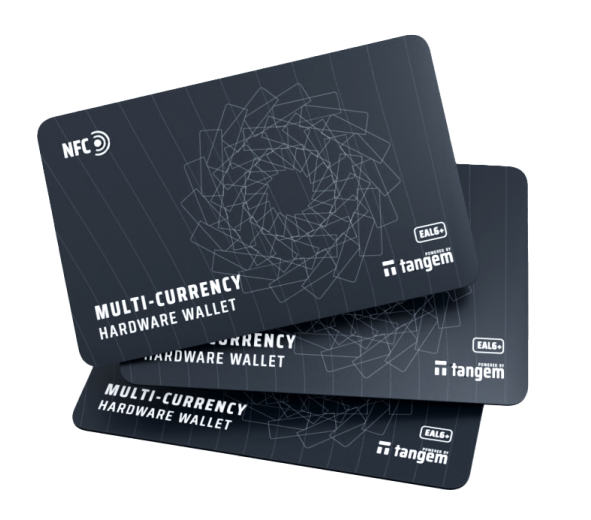
I’ll be honest—hardware can be marketed with a lot of buzzwords. This part bugs me. So please check reviews, audits, and community feedback. One practical example that balances these aspects is the tangem wallet card ecosystem, which embeds secure elements into a credit-card form factor and pairs with mobile apps to provide tap-to-sign flows that keep keys offline. It’s not a silver bullet, but it’s a real approach that many users find intuitive and robust. Try to find hands-on demos or user videos—seeing the flow makes adoption easier.
Threats and mitigations you should care about
Short list first: physical theft, social engineering, card cloning, NFC relay attacks, and supply-chain compromises. Wow! These are all real. Medium detail: physical theft is mitigated by PINs and self-locking; social engineering is curbed by clear transaction previews and user education; cloning risks depend on card hardware and should be mitigated by certified secure elements; relay attacks can be limited by proximity checks and user confirmation requirements; supply-chain compromises require vendor transparency and audits. Long thought: layered defenses work best—no single control solves everything. You need device-level protections, user-facing UX, and organizational processes for backups and lost-card handling to work together.
One practical tip: use transaction limits and daily caps for new devices, and require secondary confirmations for high-value moves. Also, keep a tested recovery path (a backup card in a safe, a multisig scheme, or a securely stored encrypted backup) and rehearse restoring access. People skip rehearsals, and that’s where the the mistakes happen—reality check: if you can’t restore from backup when stressed, the backup is worthless.
Common questions
Can a contactless card be hacked through NFC?
Short answer: extremely unlikely if the card uses a secure element and proper protocols. Medium: NFC itself is just a transmission layer; the risk comes from weak implementations or lack of PIN/user confirmation. Long: robust cards require local confirmation and never expose private keys, so even if an attacker sniffed traffic they wouldn’t get the secret. Still, don’t tap your card near strangers who might try to trick you into confirming transactions—social engineering remains the easiest attack.
What happens if I lose the card?
Depends on the vendor and your setup. Many cards support PINs that prevent unauthorized use. Ideally you have a recovery method: an encrypted backup, a backup card, or a multisig scheme. Initially I thought “oh just buy another card,” but realistically you must plan recovery before loss. Practice the recovery to be sure.
Will this replace software wallets?
Not exactly. Software wallets are convenient and are fine for small amounts or frequent activity. Contactless cards raise the security bar for larger holdings and for users who want offline keys without awkward mnemonic handling. On one hand you keep the app for UX; on the other the card holds the keys. Together they complement one another.
So where does this leave us? The whole ecosystem is maturing. My instinct said early on that people want something that feels like a card because it’s familiar. Later, after seeing real-world UX tests, I realized that card-plus-app combos can scale to mass usage if vendors focus on clear recovery, audited security, and honest UX. I’m not telling you to ditch everything else, but consider adding a contactless card to your crypto hygiene toolkit. It’s practical, it reduces certain risks, and frankly—it just feels right when you tap and it’s done. Somethin’ about that simple motion builds trust over time.
Leave a Reply